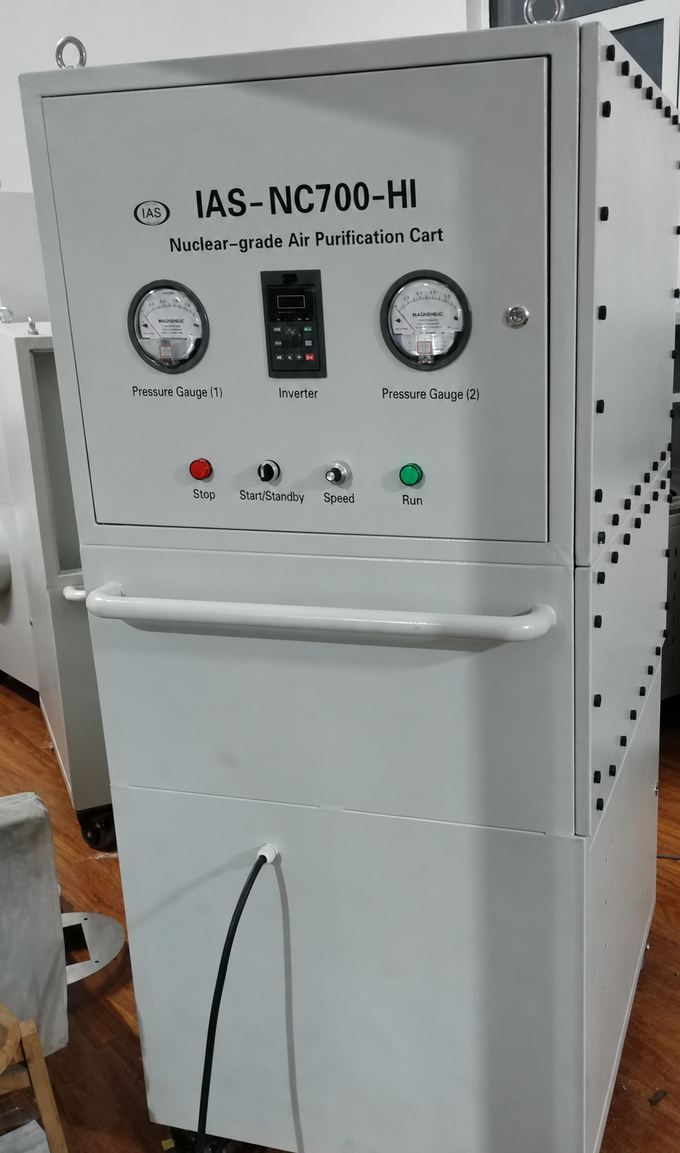
What is ASHRAE Standard 241-2023?
ASHRAE Standard 241-2023, Control of Infectious Aerosols, is the first US building standard specifically designed to reduce the transmission of infectious diseases through airborne routes. Published in May 2023, it establishes minimum requirements for ventilation, filtration, and air cleaning in occupied spaces to limit exposure to infectious aerosols — airborne particles small enough (≤5 μm) to remain suspended in air for hours and travel across rooms.
For hospital and healthcare facilities, ASHRAE 241 is particularly significant because it provides a technically rigorous framework for quantifying and achieving air quality levels sufficient to reduce healthcare-associated infections (HAIs) — one of the leading patient safety concerns, accounting for approximately 1.7 million infections annually in US healthcare settings (CDC).
Prior to ASHRAE 241, hospital air quality was governed primarily by ASHRAE 170 (minimum ventilation ACH by room type) and ASHRAE 62.1 (outdoor air requirements). Neither standard directly addressed infectious aerosol risk reduction. ASHRAE 241 fills this gap with an evidence-based, quantitative approach to infectious aerosol control that accommodates both mechanical ventilation and supplemental air cleaning technologies.
Equivalent Clean Air (ECA) — The Core Concept
The central innovation of ASHRAE 241 is the concept of Equivalent Clean Air (ECA). Rather than focusing solely on mechanical ventilation rates (as ASHRAE 170 and 62.1 do), ASHRAE 241 measures the total clean air delivery rate to an occupied space, regardless of whether that clean air comes from outdoor air supply, filtration, or active air cleaning.
The practical implication is transformative for hospital facilities: a room that currently achieves only 4 ACH of outdoor air supply (below the ASHRAE 241 IRMM minimum of 5 ACH) can achieve compliance by adding supplemental air cleaning — an IAS iodine-catalyzed HVAC system contributing 2+ ACH ECA equivalent — without requiring expensive HVAC renovations.
ECA Minimum Requirements Under ASHRAE 241
| Building Mode | Minimum ECA | Application |
|---|---|---|
| Normal Operating Mode | Per ASHRAE 170 / 62.1 | Standard occupancy, no elevated infection risk |
| Infection Risk Mgmt Mode (IRMM) | ≥ 5 ACH ECA (general spaces) | Elevated infection risk — activated by facility RSO |
| IRMM — Surgical Suites | 15–20 ACH ECA | Highest risk; SSI prevention requirement |
| IRMM — ICU | 7–10 ACH ECA | Critical care, ventilated patients |
| IRMM — Isolation Rooms | 12 ACH ECA + negative pressure | Airborne infection isolation (AII) |
| IRMM — Oncology / BMT | 12+ ACH ECA + positive pressure | Immunocompromised patient protection |
Infection Risk Management Mode (IRMM)
ASHRAE 241 introduces Infection Risk Management Mode (IRMM) — a defined building operational state activated when infectious disease risk is elevated. Triggers for IRMM activation include: facility-specific outbreak detection, community infection surveillance data exceeding defined thresholds, admission of a patient with a confirmed airborne infectious disease, or pre-scheduled activation during known high-risk periods (flu season, respiratory illness season).
When IRMM is activated, facilities must achieve the ECA targets specified for each space type. ASHRAE 241 requires that facilities have written IRMM protocols, documented ECA calculations for each space, and records of air cleaning system performance. This documentation is increasingly required by The Joint Commission during hospital accreditation surveys.
The Joint Commission (TJC) hospital accreditation standards are progressively aligning with ASHRAE 241. As of 2025, TJC expects hospitals to have documented air quality management plans that address infectious aerosol risk. ASHRAE 241 compliance documentation — including ECA calculations by room type, IRMM protocols, and air cleaning system records — directly supports TJC accreditation and CMS Conditions of Participation compliance.
ASHRAE 241 vs ASHRAE 170 vs ASHRAE 62.1
| Standard | Primary Focus | Key Metric | Air Cleaning? | Hospital Relevance |
|---|---|---|---|---|
| ASHRAE 241-2023 | Infectious aerosol control | Equivalent Clean Air (ECA) | ✅ Central concept | Newest; infectious disease risk focus |
| ASHRAE 170-2021 | Healthcare ventilation | Minimum ACH by room type | Limited (HEPA recirculation) | Code requirement for new construction |
| ASHRAE 62.1-2022 | Outdoor air / IAQ | Outdoor air CFM per person/ft² | Not addressed | General building air quality baseline |
| CDC Guidelines | Infection control guidance | Qualitative + ACH targets | Mentioned for isolation rooms | Isolation room design guidance |
| FGI Guidelines | Healthcare facility design | Design requirements | Referenced via ASHRAE 170 | New construction / renovation |
ASHRAE 241 does not replace ASHRAE 170 or 62.1. Hospitals must comply with all three where applicable. ASHRAE 170 provides minimum mechanical ventilation requirements for new construction; ASHRAE 241 adds an infectious aerosol control layer using ECA. The key advantage of ASHRAE 241 is that it enables compliance for existing buildings through air cleaning supplementation, without the prohibitive cost of full HVAC system replacement to increase mechanical ventilation rates.
IAS Iodine-Catalyzed Technology Under ASHRAE 241
Iodine Air Systems' iodine-catalyzed filtration qualifies as an air cleaning technology under ASHRAE 241 Section 5 and contributes to ECAother through a dual mechanism not available from HEPA filtration alone.
Mechanism 1: HEPA Filtration (ECAfiltration Contribution)
IAS systems incorporate H13/H14 HEPA final filtration achieving ≥99.97% efficiency at the Most Penetrating Particle Size (MPPS, 0.2–0.3 μm). Infectious aerosols in the 0.3–5 μm range are captured with even higher efficiency. This HEPA stage directly contributes to ECAfiltration, calculated as: ECA_HEPA = airflow_CFM × (1 - penetration) / room_volume_CFM_per_ACH
Mechanism 2: Iodine Catalytic Pathogen Inactivation (ECAother Contribution)
Elemental iodine (I₂) in the IAS filtration train actively neutralizes pathogens through chemical inactivation — disrupting cell membranes, oxidizing nucleic acids, and denaturing proteins of bacteria, viruses, and fungi. This active inactivation provides Air Cleaning Effectiveness (ACE) against pathogens that pass through or bypass the HEPA stage, and against pathogens in aerosol form before they are captured. The iodine mechanism is passive (requires no UV lamps, no consumable chemicals, no ozone generation) and operates continuously throughout the carbon bed service life.
The combined HEPA + I₂ mechanism is particularly relevant for hospital pathogens: Mycobacterium tuberculosis (TB aerosol, 1–5 μm, highly resistant to chemical inactivation — iodine provides additional inactivation beyond mechanical capture); SARS-CoV-2 and influenza virions (0.1–0.3 μm — below peak HEPA efficiency, iodine inactivation provides backup); C. diff spores (2–5 μm — HEPA capture primary, I₂ inactivation on captured organisms prevents filter breakthrough). Contact: (650) 646-5199.
Air Cleaning Technology Comparison Under ASHRAE 241
+ HEPA
Filtration
Irradiation (UVGI)
Room-by-Room Hospital Applications
ECA Calculation Example — Hospital General Ward Room
The following worked example demonstrates how IAS iodine-catalyzed filtration contributes to ASHRAE 241 ECA for a typical hospital general ward room.
| Parameter | Value | Source |
|---|---|---|
| Room dimensions | 16 ft × 12 ft × 9 ft = 1,728 ft³ | Typical general ward |
| Room volume flow at 1 ACH | 1,728 ft³/hr = 28.8 CFM | Calculation |
| Existing mechanical ventilation | 3 ACH = 86.4 CFM outdoor air | ASHRAE 170 minimum |
| ECAventilation | 3.0 ACH (below 5 ACH IRMM minimum) | Existing HVAC |
| IAS system airflow | 350 CFM (½ of NC700-HI capacity) | IAS specification |
| IAS HEPA ACE | 0.9997 (99.97%) | H13 EN 1822 |
| ECAIAS filtration | 350 × 0.9997 / 28.8 = 12.1 ACH equivalent | ASHRAE 241 formula |
| ECAtotal | 3.0 + 12.1 = 15.1 ACH ECA | ECA sum |
| ASHRAE 241 IRMM target | ✅ 5 ACH minimum — EXCEEDED 3× | ASHRAE 241-2023 |
A room that achieves only 3 ACH from mechanical ventilation (common in older hospital buildings) reaches 15 ACH ECA total by adding a single IAS-NC700-HI unit running at half capacity. This exceeds the ASHRAE 241 IRMM target by 3× — without touching the HVAC system. The entire retrofit can be completed in hours, not months.
IAS Hospital Air Purification Systems
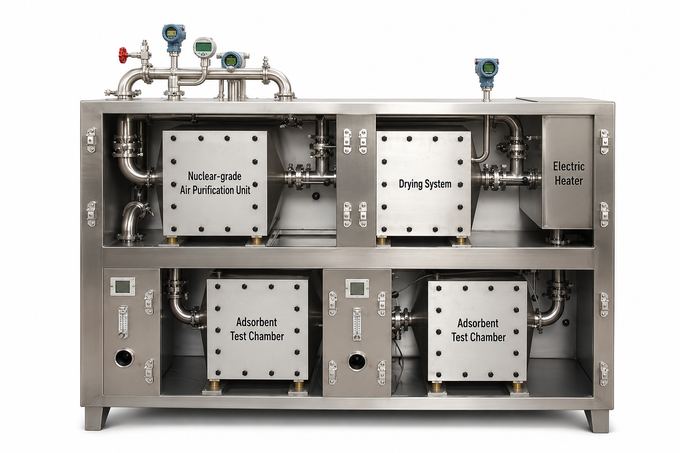
ASHRAE 241 Compliance Documentation
IAS provides a complete documentation package supporting ASHRAE 241 compliance reporting, Joint Commission accreditation, and CMS Conditions of Participation audits.
- ECA calculation worksheet — room-by-room ECA calculations per ASHRAE 241 methodology, showing ECA contributions from ventilation, IAS filtration, and other sources
- HEPA filter certificate — EN 1822 H13/H14 efficiency test (DOP/PAO in-place test after installation)
- Air Cleaning Effectiveness (ACE) documentation — I₂ iodine catalytic mechanism technical brief supporting ASHRAE 241 Section 5 ECAother calculation
- Airflow measurement records — commissioning documentation verifying CFM delivery and system performance at installation
- IRMM protocol template — customizable template for facility IRMM activation criteria, procedures, and monitoring records
- Maintenance schedule — filter change intervals, performance monitoring requirements, and documentation requirements for accreditation records
Engineering FAQ
What is ASHRAE 241-2023 and how does it differ from ASHRAE 170?
ASHRAE 241-2023 (Control of Infectious Aerosols) focuses specifically on reducing infectious aerosol transmission using the Equivalent Clean Air (ECA) concept — combining mechanical ventilation plus air cleaning technologies. ASHRAE 170 (Ventilation for Healthcare Facilities) specifies minimum mechanical ventilation ACH by room type but doesn't address air cleaning contributions. ASHRAE 241 allows facilities to achieve compliance through supplemental air cleaning without expensive HVAC renovations. Both standards apply simultaneously to hospital facilities.
What is Equivalent Clean Air (ECA) and how is it calculated?
ECA is the total clean air delivery rate in a space, expressed as equivalent ACH or CFM, combining all sources: ECAtotal = ECAventilation + ECAfiltration + ECAUVGI + ECAother. For IAS systems: ECAIAS = airflow (CFM) × ACE / [room volume (ft³) ÷ 60]. Example: 700 CFM IAS unit in a 2,000 ft³ room, HEPA ACE = 0.9997 → ECAIAS = 700 × 0.9997 / (2,000/60) = 21 ACH equivalent. Contact IAS engineering for site-specific ECA calculations: (650) 646-5199.
Does iodine-catalyzed air cleaning qualify under ASHRAE 241?
Yes. ASHRAE 241 Section 5 allows air cleaning technologies to contribute to ECA provided they have documented Air Cleaning Effectiveness (ACE) against relevant pathogens. IAS iodine-catalyzed systems qualify through two contributions: (1) HEPA filtration ACE (≥99.97%) contributing to ECAfiltration; (2) I₂ active pathogen inactivation contributing to ECAother. IAS provides technical documentation supporting both ECA contributions for inclusion in hospital compliance records. Contact: (650) 646-5199.
What triggers Infection Risk Management Mode (IRMM)?
ASHRAE 241 requires facilities to define IRMM triggers in their air quality management plan. Common triggers: (1) admission of a patient with confirmed airborne-transmissible infection (TB, measles, novel respiratory pathogen); (2) community infection surveillance data exceeding pre-defined thresholds; (3) facility outbreak declaration; (4) pre-scheduled seasonal activation (respiratory illness season). When IRMM is activated, ECA targets increase to minimums of 5 ACH general spaces, higher for surgical/ICU/isolation areas. Facilities must document IRMM activation events and ECA verification for Joint Commission accreditation.
Does ASHRAE 241 apply to existing hospital buildings?
Yes — ASHRAE 241 is explicitly designed to apply to both new and existing buildings. For existing facilities with inadequate mechanical ventilation ACH (common in buildings constructed before modern standards), the ECA framework allows compliance through supplemental air cleaning without full HVAC replacement. An IAS-NC700-HI (700 CFM) unit in a typical hospital room can contribute 10-20+ ACH ECA equivalent, bringing even poorly-ventilated older facilities into compliance. This retrofit approach can be implemented in days, not months, at a fraction of HVAC renovation cost. Contact for existing facility assessment: (650) 646-5199.
What documentation does IAS provide for Joint Commission accreditation?
IAS provides a complete ASHRAE 241 compliance documentation package: room-by-room ECA calculation worksheets; HEPA efficiency test certificates (EN 1822 H13/H14, DOP/PAO in-place test); Air Cleaning Effectiveness (ACE) documentation for I₂ iodine inactivation; commissioning airflow measurement records; IRMM protocol template; maintenance schedule; and filter change history template. This package is designed to directly support Joint Commission ASHRAE 241 documentation requirements and CMS Conditions of Participation air quality audits. Contact: sales@iodineairsystems.com.
ASHRAE 241 ECA Compliance Consultation
IAS engineers provide free pre-sales ASHRAE 241 ECA calculations for your facility — room-by-room analysis, IRMM protocol design, and compliance documentation scope. Response within 1 business day.